
An engineer as civil servant
Li Hongyi, Director of Open Government Products, is on a mission to bring in a start-up culture within government product teams to keep up with demanding needs of public services, driven by technologies like artificial intelligence.
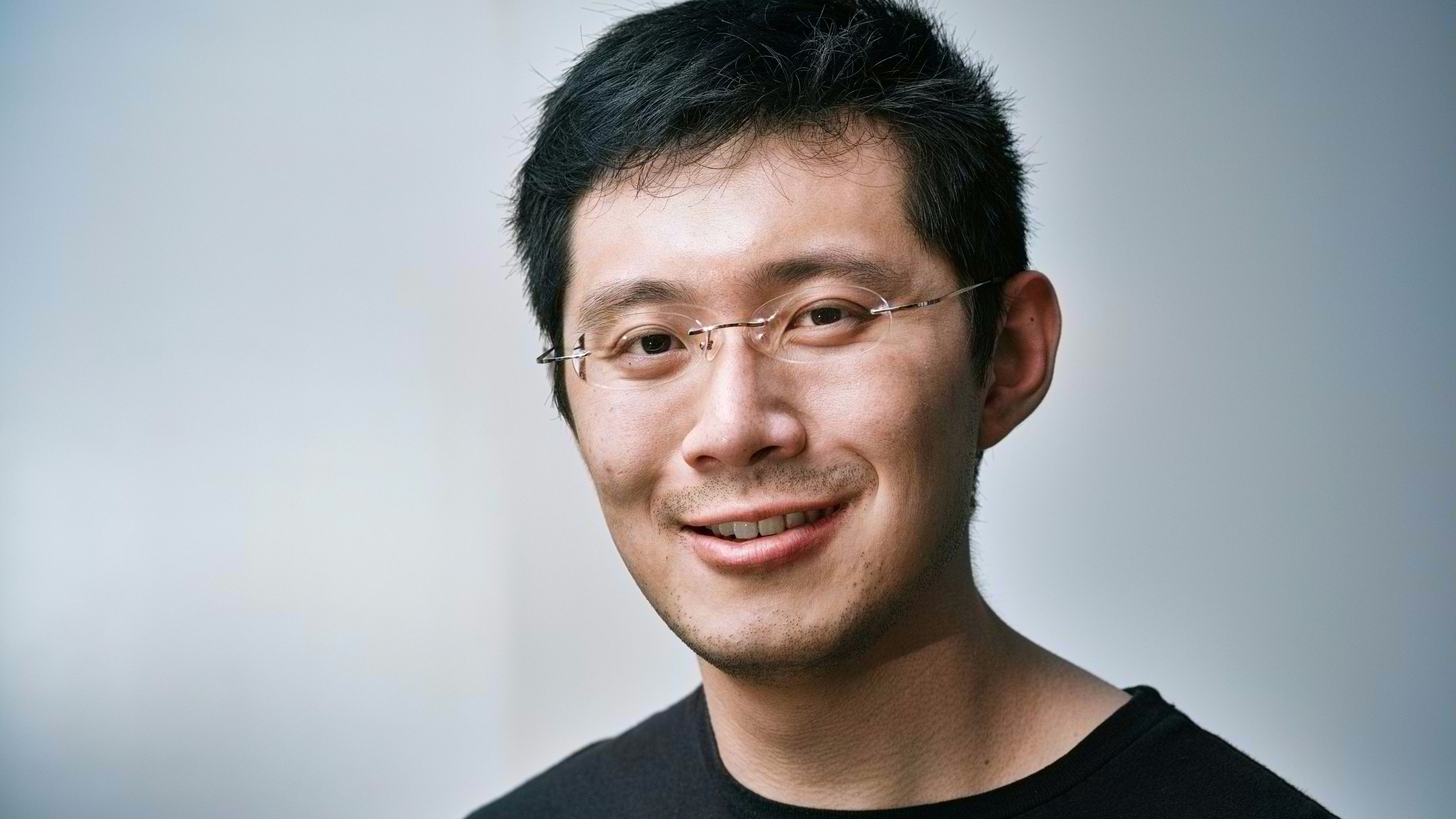
Open Government Products (OGP) Director Li Hongyi is a firm believer that government projects can be executed with the same efficiency and speed as private sector projects. Image: OGP
Open Government Products (OGP) Director, Li Hongyi, is not a civil servant in the traditional mould, and his style of working resembles private sector technology leaders from around the world
This means he is not afraid to speak his mind and, more importantly, he likes to lead from the front.
What sets OGP, a division within the Government Technology Agency of Singapore (GovTech Singapore) since July 2019, apart is its mandate to act as an experimental sandbox.
Its fast-moving teams are insulated from the traditional bureaucratic pressure of civil service so that they can focus on rapid prototyping and adopting the best technological and organisational practices from top private tech companies.
Speaking to GovInsider, Li reminisces that when he started OGP, many people insisted it was impossible for the government to build products the way the private sector does.
Instead of debating this point, he set out to demonstrate that it is indeed possible, and early products like data.gov.sg, and Parking.sg proved the point.
Parking.sg was built by just two engineers, and yet became hugely successful as a highly visible citizen-facing app that solved the perennial problem of running out of paper parking coupons.
“We (OGP) even built core Covid-19 systems like the Covid workflow management and appointment systems, and yet the criticism kept shifting (‘you were lucky,’ ‘you can’t do it again,’ ‘you can’t do enterprise’).
“The very fact that the ‘goalposts always move’ is evidence of impact: OGP has repeatedly shown that government can ship high-quality, repeatable digital products at scale,” says Li.
Over time, OGP has delivered more than 40 products and counting, across the public sector.
Adopting a start-up culture
Li contrasts the operating models of modern start-ups with the traditional government hierarchy.
“No serious start-up today would choose a structure where decisions are made at the top and then [are] slowly translated into instructions via multiple layers of note-takers and deputies”.
“Any company that tried to operate this way would be dead within the week,” he says.
Start-ups experiment with flatter, more responsive structures and are aggressively adopting artificial intelligence (AI).
“Governments cannot credibly claim they are so different that they can ignore these shifts.
“The implication is that public sectors will ultimately have to evolve towards more networked, technology-native ways of working,” he adds.
So, for Li, the real innovation in government tech is not about flashy new systems, but a “different way of working”.
Instead of betting on massive, one-shot national IT projects, the public sector should behave more like a research lab, “running many small experiments, learning quickly from what fails, and only scaling what works”.
This is because, says Li, large government projects are high-risk big bets.
Giving an example, he notes that a problem, such as electronic medical records, should never be framed as a single, unified national system to be delivered on a fixed launch date, as this could result in a loss of agility while developing its various components.
Instead of asking, “What is our big project?” governments should start with: “What problem are we trying to solve, and what are the many ways to solve it?”
Framed in this way, it becomes clear that the problem that needs to be solved first is healthcare data sharing in a secure manner.
“From there, you should surface many possible approaches, such as data standards of hospitals, data-sharing agreements, patient-owned health wallets, validated toolkits, or procurement-driven solutions, while recognising that one can easily generate 100 plausible ideas, but only a small fraction will actually work in practice.”
The central question, he adds, is not “Which big system do we bet on?” but “How do we validate or invalidate these ideas as quickly, cheaply, and safely as possible?”
“This means running tightly scoped, low-risk trials with real users, for example, piloting a ‘health wallet’ with a few GP clinics in one neighbourhood, then gradually extending to a single hospital department, so that issues surface early without jeopardising the whole system”, he says.
Li adds that electronic data sharing should be treated as an exploration and research exercise, where structured experimentation and learning from failure drive the design, rather than as a one-off planning exercise that assumes the right answer is already known.
Open source is good for governments
As a champion of open source in government projects, Li admits that it is often difficult to convince decision makers that it is the way to go.
The battle is not always a logical one.
Li notes that most engineers already understand the technical case for open source; the real obstacle is the instinctive fear among non-technical officials that “open” means “less secure”.
However, he says, the open-source argument cannot be won with a 20-page memo. It is won by pointing to serious, reputable organisations already using open-source products safely.
Building social proof is, in his view, the most effective way to shift mindsets.
On the recurring security concerns around open source, Li argues that closed, obscure systems do not become secure simply because their code is hidden; more often, they conceal years of unpatched vulnerabilities.
By contrast, widely used open-source components are continuously scrutinised by a global community of users and developers.
When a flaw appears in something like PostgreSQL, Li notes that it is immediately noticed and fixed quickly, making it, in practice, more secure than a bespoke system maintained by a small, overstretched team.
Changing nature of civil service jobs
The conversation then turns to the Singapore civil service’s rapid adoption of AI tools, many developed by OGP.
Asked how this shift affects traditional civil service roles, Li says much of today’s administrative work consists of pattern-based tasks that AI can increasingly handle.
He does not, however, envisage officials simply watching AI work and pressing a button.
New jobs will emerge in designing and managing the systems: to set up flows where AI handles the routine, while humans supervise, calibrate, and intervene on the complex edge cases.
He shares a hypothetical example of a public, parliamentary, or media query to a Minister.
Getting correct answers can take weeks as questions are briefed, researched, drafted, and cleared through multiple layers.
In the future, there can be a pipeline where AI drafts an answer from internal data, a second AI verifies the claims and sources, and the Minister simply reviews and approves, thus reducing turnaround to minutes, he notes.
Going forward, civil servants would become system architects and stewards, not manual processors of requests .
Growth pangs of OGP
As OGP expanded, Li says, its challenge has changed: it is no longer about proving the model worked but in scaling it.
He notes that the five-person founding team’s approach cannot be replicated wholesale at scale.
When OGP reached 50 to 60 staff, everyone still reported directly to him, an arrangement he says did not work efficiently anymore.
In terms of manpower, OGP has grown to nearly 200 officers, roughly doubling headcount between 2024 and 2026.
He now focuses not on building one large, tightly controlled unit, but on “replicating the conditions that made the early team effective”.
That meant creating small, semi-autonomous teams with start-up speed and ownership, rather than relying on a single “island of excellence” at the top.
Li adds that OGP operates “more like an incubator than a company”.
It hires strong talent, gives teams autonomy and support, and lets multiple groups pursue opportunities in parallel.
The aim is to “maximise intellectual surface area” across the organisation, not force everyone into one central strategy.