
The private sector’s role in the agentic state is changing alongside their government client
As agentic AI takes over more routine and generic tasks, Capgemini’s Marc Reinhardt argues that deep domain knowledge and systems understanding is ever more important than digital skills and tech know-how.
-1782192011475.jpg)
Capgemini is the only private sector founding partner for the first Global Government Technology Centre (GGTC) in Berlin, Germany, which is also WEF's first centre dedicated to public sector's digital transformation. Image: Capgemini
For years, artificial intelligence (AI) in the government knew its place. While the tech predicts, flags and recommends a course of action, the public officer decides and executes the next steps.
But agentic AI, with its ability to perform autonomous actions, is blurring the lines between what’s managed by the machine and human.
Capgemini’s Global Public Sector Lead’s Marc Reinhardt shares with GovInsider that the hardest problems facing governments in the agentic AI era aren’t the technical ones, like the messy, siloed data or the legacy systems.
Instead, it questions the government’s fundamental operating model and how humans and machines should collaborate.
He admits that the shift is changing Capgemini’s own job too.
Rather than simply piecing together software for a particular task as a systems integrator, Reinhardt says the consultancy now acts more as an ecosystem integrator.
“We're constantly being challenged,” he says, highlighting that Capgemini’s own operating model had earlier shifted, with offshoring years ago, and is now shifting again with agents.
As a partner supporting govtech projects, its redefined role now entails helping public agencies identify the right partners and bring them together to draw where human work ends and agent work begins.
Building the first Global GovTech Center
Capgemini is also the only private sector founding partner for the first Global Government Technology Centre (GGTC) in Berlin, Germany.
As the first World Economic Forum (WEF) centre dedicated to the public sector’s digital transformation, GGTC operates as a non-profit to connect national govtech systems globally.
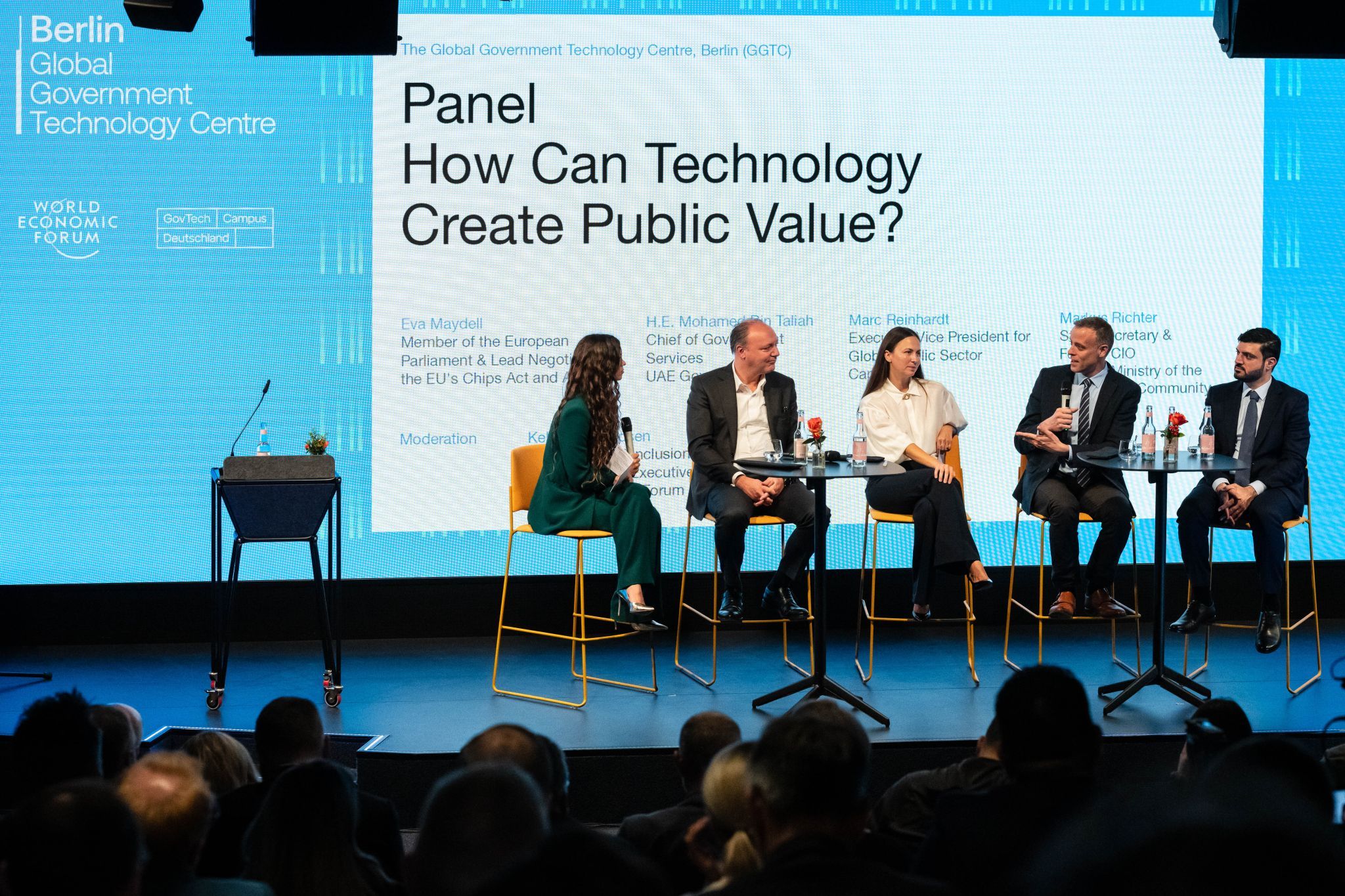
Reinhardt shares that Capgemini’s day-to-day client work and global experience support GGTC’s research agenda by giving it a practical reach.
To date, GGTC has published two reports.
One was published in 2025 to map out the strategic value of agentic AI for governments, followed by a readiness framework and practical toolkit published this April to help governments get started.
According to Reinhardt, GGTC is now studying lead implementors of agentic AI like the UAE, Ukraine, Singapore and more, and gathering the best practices of rolling out agentic AI in the government. Its next report is planned for next year.
He describes the GGTC’s value in closing a structural gap that multilateral forums lack. While there are plenty of high-level conversations, there has been little continuity and shifting priorities with rotating presidencies or chairmanships.
“We need some muscle that structures the collaboration on a certain topic like agentic AI, instead of just throwing up topics and moving on to the next ones without completing the first ones,” he explains.
Reinhardt also candidly shares how the dialogue helps Capgemini, by staying close to the govtech dialogues, finding out how governments are responding and picking up fresh ideas.
How private sector support is evolving
The early public-private partnership models were straightforward, where the public agency writes the brief and the vendor executes it.
Reinhardt says that this model is breaking down, adding that the opposite extreme of leaving vendors to take the wheel doesn’t work either.
As agentic AI takes over more routine and generic tasks, he argues that deep knowledge of one’s domain and understanding of how systems interact is ever more important for both sectors to grasp.
Without that context, public agencies risk making “rash or bad decisions based on a cool-sounding promise from a tech provider,” he explains.
“Having the contextual knowledge at the back of your mind is really how you advise your clients well,” he says to private vendors, highlighting that it’s not enough today for them to only advise from the tech side.
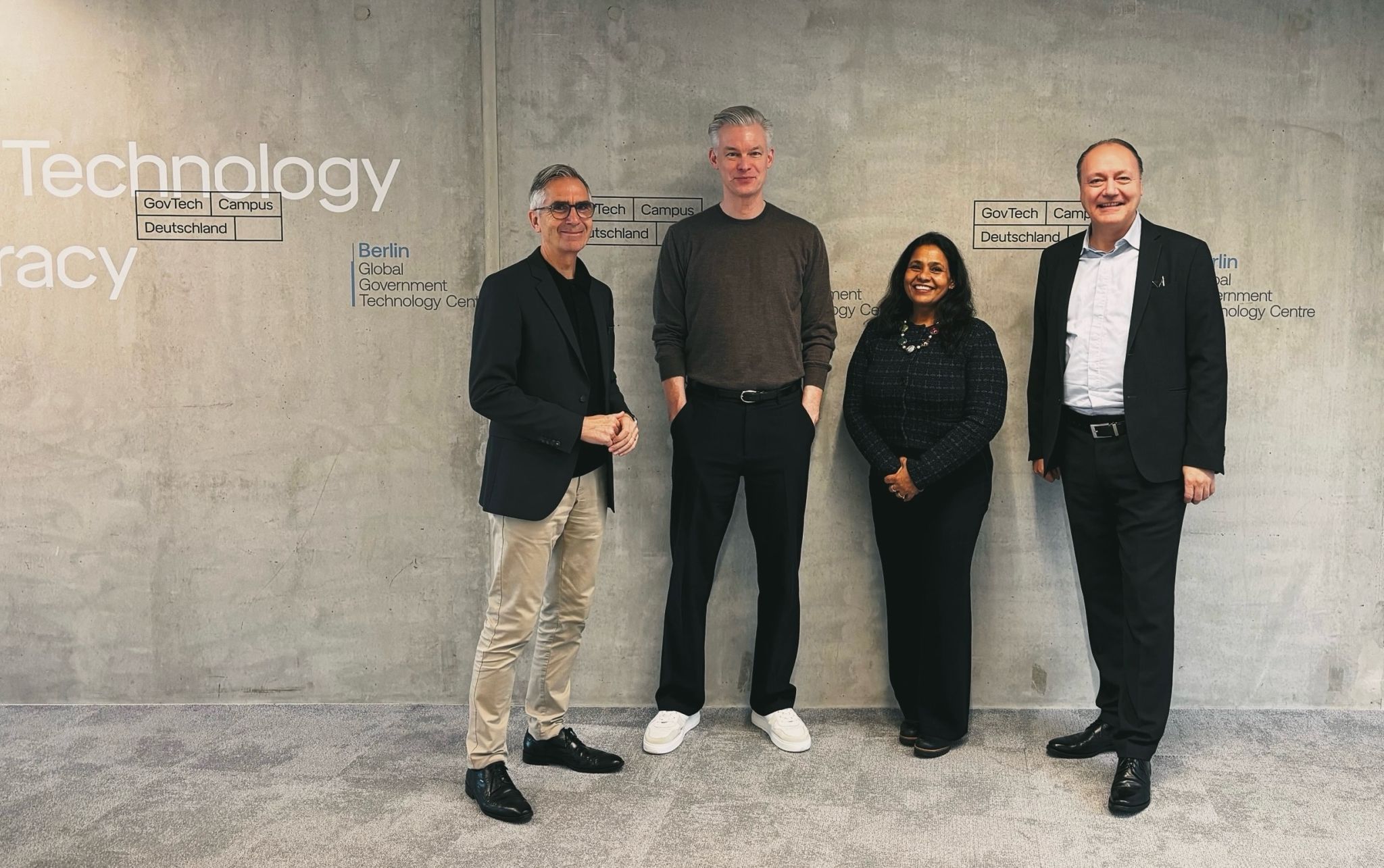
According to Reinhardt, the ideal partnership pairs an educated public agency that “understands what they want” with a private sector partner capable enough to deliver and disciplined enough to respect the government’s mandate to lead.
When it comes to GGTC’s work to help governments leverage the best of the startup ecosystem, Reinhardt explains how GGTC’s bridging role demands more than just digital skill and tech know-how.
He shares an example of a visibility gap that governments face, which is that they often can't see the full landscape of who could help them.
Public agencies often don't know which promising, innovative startups could help them, and when they do find one, rigid tender rules built for large incumbent vendors rarely fit how a startup operates.
He highlights GGTC’s role in organising and facilitating startup ecosystems and a “great tool to especially shape early stages of the conversations [around public-private partnerships].”
What's next for public sector AI adoption
If there’s one principle guiding where Reinhardt sees this all heading, it’s one that he’s held for years even before agentic AI made it urgent.
That is: “The public sector is systemic and that has always been the case,” as he stresses the public sector’s role as an open ecosystem enabler for collaboration and exchange of data and new ideas.
He points to the European Commission’s common data spaces initiative that creates a secure, unified single market for data across the European Union (EU), instead of having each agency or country guard its own dataset in isolation.
It's the kind of open exchange he believes agentic AI now makes more urgent.
Instead of individual data sets, GGTC's own next report is built around a similar question, but at the level of entire governments.
Reinhardt shares that the upcoming report will study the UAE, Ukraine, and Singapore, which are the countries he considers furthest along on agentic AI, to surface what others can learn from how they got there.
Considering that the EU is leading the way for responsible AI, a parallel track will look at the rules, regulations, and guardrails that Germany, France, and the UK are building in response to agentic AI.
Instead of betting on that one model of agentic AI adoption, it’s about having governments and private sector partners comparing notes openly across different risk appetites, which will get further than any single government or agency trying to work it out alone.
Find out more: