
Yessenia Pennélope Henriquez, Information Systems Specialist, General Secretariat of the Central American Integration System, El Salvador
By James Yau
Meet the Women in GovTech 2025.
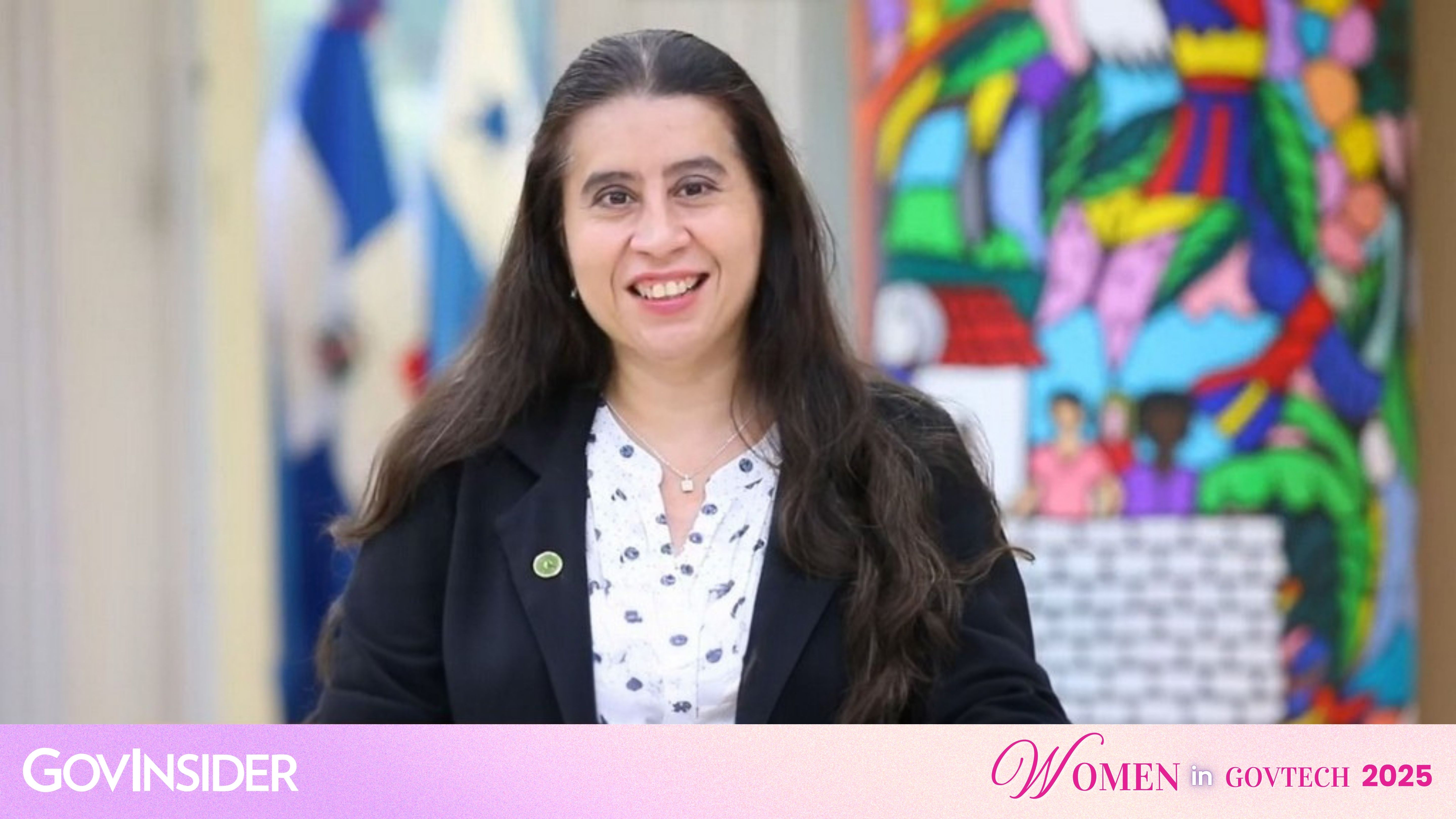
Yessenia Pennélope Henriquez, Information Systems Specialist, General Secretariat of the Central American Integration System, shares about her journey. Image: Yessenia Pennélope Henriquez
1) How do you use your role to ensure that technology and policy are truly inclusive?
In my role, I help shape regional digital initiatives that reflect the diverse realities of Central America. Inclusion guides every decision. I work to strengthen digital skills and to ensure that new systems are accessible, secure, and built around people’s needs.
My goal is simple: digital transformation should serve everyone, not only those who already have access.
This requires creating spaces where we can identify real barriers and design solutions that respond to actual needs. Inclusion comes first, not as an afterthought.
Whether we're developing digital identity systems or launching training programmes, the objective stays the same: technology should improve lives, build trust, and reduce inequality.
It starts with listening. Before we design any policy or roll out a new system, we need to understand who might be left behind and why.
In our region, digital exclusion often intersects with geography, income, education, and gender. Rural communities face connectivity challenges.
Women encounter barriers to accessing technology and digital literacy. Indigenous populations need services in their own languages. People with disabilities require platforms designed with accessibility from the start.
The digital landscape changes fast. New technologies bring new opportunities but also new risks of exclusion. Artificial intelligence, for example, has enormous potential to improve public services and drive economic growth. But if AI systems are trained on biased data or designed without diverse input, they can deepen existing inequalities.
Technology can only be inclusive if people trust it. That's why cybersecurity and data protection are central. When citizens worry about how their personal information is used, they won't adopt digital services.
One advantage of working at a regional level is the ability to foster collaboration. Countries in our region face similar challenges, and they can learn from each other's successes and mistakes.
We facilitate the exchange of best practices and coordinate efforts so that digital transformation is consistent across borders. This is especially important for things like digital trade, cross-border data flows, and regional cybersecurity protocols.
It's easy to focus on metrics like how many people have internet access or how many digital ID cards have been issued. Those numbers matter, but they don't tell the full story. What really counts is whether technology is making a tangible difference in people's lives.
Technology should expand opportunities, not create new barriers. Policy should protect rights, not just enable efficiency. And inclusion should be built into every decision we make, from the start.
When we get it right, the impact is powerful. People gain access to services that improve their quality of life. Businesses can compete in the digital economy. Governments become more efficient and responsive. And trust grows between institutions and citizens.
2) What’s a moment in your career when you saw firsthand how technology or a new policy changed a citizen’s life for the better?
Early in my career, I witnessed how an information system for productive value chains transformed access to public services in a rural community. This experience showed me the real power of technology when it's designed with all citizens in mind, not just those in urban centres.
I remember one woman from that community who ran a small business. Before the system was implemented, she had to travel to the main city to complete basic administrative procedures for her business.
Each trip meant closing her shop for the day and spending money she could barely afford on transportation. These weren't occasional visits. They were regular requirements just to keep her business running legally.
The new system changed everything. It allowed her to complete these procedures from a community access point near her home. No more lost workdays. No more travel expenses. She could handle her paperwork quickly and get back to serving her customers.
But the impact went beyond convenience. The system also gave her visibility into support programs she didn't even know existed. Programs designed to help small businesses like hers, but that had been practically invisible to people outside.
With this new access to information and resources, she was able to expand her business. She hired two more women from her community, creating jobs in an area where opportunities were scarce.
This wasn't about flashy innovation or cutting-edge technology. It was about removing barriers. The system worked because it was accessible, practical, and solved a real problem that people faced every day.
It taught me to ask different questions when evaluating technology initiatives. Not just "Does this work?" but "Who does this work for?" Not just "Is this efficient?" but "Who gets left out if we do it this way?"
The woman I met didn't need advanced features or complex platforms. She needed something reliable that fit into her daily reality. She needed a system that recognized her time was valuable, that traveling to the city wasn't just an inconvenience but a genuine hardship.
When we got that right, the technology became a bridge instead of another obstacle.
It also reminds me that we can't design solutions from behind a desk and expect them to work everywhere. We need to understand the actual barriers people face. We need to talk to citizens, visit communities, and test our assumptions. Only then can we build systems that truly serve everyone.
Technology has incredible potential to level the playing field, but only if we're intentional about inclusion from the very beginning.
3) What was the most impactful project you worked on this year, and how did you measure its success in building trust and serving the needs of the public?
This year, advancing the Regional Digital Strategy of SICA (General Secretariat of the Central American Integration System) has been the most significant work I've been involved in.
It's a collective effort bringing together eight countries around a shared vision: a connected, inclusive, and resilient Central America and Dominican Republic.
I'm part of the technical team implementing this strategy and contributing to the Regional Electronic Signature Unit. The work touches multiple dimensions, including interoperability, open data, cybersecurity, and digital inclusion.
But the real impact goes beyond technical achievements. It's about building trust between institutions and citizens across borders.
Regional cooperation isn't easy. Eight countries mean eight different political contexts, regulatory frameworks, levels of digital maturity, and national priorities. Getting everyone aligned requires patience, diplomacy, and a genuine commitment to mutual benefit.
What makes this work meaningful is that we're not imposing solutions from the top down. We're creating frameworks that countries can adapt to their own realities while maintaining regional coherence.
For example, the Regional Electronic Signature project enables legal recognition of digital signatures across member states. This sounds technical, but it has real implications: businesses can operate across borders more easily, governments can deliver services digitally, and citizens can complete transactions without physical paperwork or crossing international boundaries.
Interoperability is another critical piece; when government systems in different countries can communicate with each other, it removes friction.
A digital identity verified in one country can be recognized in another. Health records can be shared securely when someone seeks medical care abroad. Business permits don't require duplicate documentation in every jurisdiction.
Trust doesn't come automatically, especially when you're dealing with sensitive topics like data governance and digital identity. People worry about privacy. Businesses worry about compliance costs. Governments worry about sovereignty.
We're building something that will outlast; the infrastructure, technical, and institutional will serve the region for years to come. That's what makes this work so impactful, and perhaps most importantly, it represents a commitment across our countries to build a digital future that works for everyone in our diverse region.
My professional path has also been shaped by the Women in GovTech Challenge. As a mentor for the second cohort, I worked with women from across the world, supporting them in developing leadership skills in public digital transformation.
The mentoring process exceeded my expectations and became a space of continuous learning, real-time feedback, and mutual growth.
Mentoring allows me to share what I have learned over the years, but it also gives me the chance to learn from new perspectives and experiences.
I value this exchange. It helps strengthen the community of women working in digital government and supports the region’s long-term digital development.
4) What was one unexpected lesson you learned this year about designing for real people? This can be about a specific project or a broader lesson about your work.
I've learned that simplicity often makes the deepest impact, we sometimes think innovation must be complex, but real innovation lies in clarity and accessibility.
We can't simply transplant digital solutions from one context to another and expect similar results. What works in an urban setting might fail completely in a rural community.
A platform designed for young users might exclude older populations or those with limited digital literacy. An interface that makes sense in one language or cultural context might confuse or even offend in another.
Now, before starting any digital transformation project, I spend time understanding how people currently solve this problem without technology.
What existing systems or informal networks would our solution disrupt? What are the power dynamics that might affect adoption? Who might be excluded if we design it this way? What assumptions are we making about access, literacy, or trust?
As technical experts, we develop blind spots. We assume things are obvious when they're not. We design for ourselves instead of for the people who will actually use the system. We focus on features instead of on solving real problems.
I see this happen all the time. A team builds something technically impressive, with all the latest capabilities, but users find it confusing or irrelevant. The disconnect isn't because users aren't smart enough. It's because we didn't design with them in mind from the start.
I've learned to actively seek out perspectives that challenge my assumptions. This means including diverse voices in the design process from the beginning. It also means being willing to hear that our idea won't work. That's uncomfortable, especially when we've invested time and resources. But it's better to learn this early than to launch something that fails or, worse, causes harm.
Inclusion isn't about adding features or checking boxes. It's about fundamentally rethinking how we approach design.
It means recognising that our perspective as technical experts is limited. It means understanding that people have been solving problems long before we arrived with our digital solutions, and their existing approaches have value and logic, even if they're not what we would have designed.
The solution isn't to dumb things down. It's to design with actual users in mind from the start. Simple language. Clear instructions. Visual cues. Multiple ways to access the same service. These aren't nice-to-haves. They're the requirements for genuine inclusion.
In many communities, especially those that have been marginalized, there's understandable skepticism about new government systems or technology platforms.
This skepticism isn't irrational. It's based on experience. If we ignore it or dismiss it, we won't build trust. But if we acknowledge it and design with it in mind with strong privacy protections, transparent data practices, and genuine accountability, we can start to change that dynamic.
Listen before you build, question your assumptions constantly, and design with people, not for them. That's where real innovation happens.
5) We hear a lot about AI. What's a practical example of how AI can be used to make government services more inclusive and trustworthy?
AI has real potential to improve how governments listen and respond to citizens. One practical example is using AI to analyse service requests and public feedback at scale. This can help identify communities that consistently struggle with access or face recurring challenges, allowing institutions to respond faster and more effectively.
Instead of waiting for problems to escalate or relying on anecdotal reports, AI can surface patterns that would otherwise stay hidden.
For instance, if certain neighborhoods repeatedly request help with the same service, or if complaints spike in a particular region, AI can flag these trends early. This gives governments the information they need to allocate resources better and address systemic issues before they worsen.
Where these approaches have been implemented thoughtfully, early results are encouraging. Communities previously underserved are accessing public services without intermediaries for the first time. Citizen satisfaction has increased significantly. People feel heard because their feedback is actually being analysed and acted upon, not just filed away.
This demonstrates how AI, when implemented with a user-centred approach and cultural sensitivity, can transform government services from exclusive to genuinely inclusive.
However, none of this works without trust. And trust depends on transparency.
Governments must explain how AI is used. Not in technical jargon, but in language ordinary citizens understand. What data is being collected? How are decisions being made? Who has access to personal information? What safeguards are in place to prevent misuse?
People need to know that AI is a tool to help them, not to surveil or control them. This means clear communication about what technology does and doesn't do. It means giving people choices about how their data is used. It means building in accountability when things go wrong.
AI should support human judgment, not replace it. Algorithms can identify patterns and flag issues, but people should make final decisions, especially in cases that affect someone's rights or access to essential services.
AI systems can have biases built into them, often reflecting the biases in the data they're trained on. If historical data shows that certain communities were underserved, an AI trained on that data might perpetuate the same patterns.
That's why human oversight is essential. People can question results, consider context, and intervene when the system gets something wrong.
This is especially important in sensitive areas like social services, law enforcement, or healthcare. An algorithm might flag someone as high-risk based on correlations in data, but a human can understand nuance and individual circumstances that no algorithm can fully capture.
Inclusion in AI isn't only about who benefits from the technology. It's also about who understands and trusts the process.
If only technical experts or government officials understand how an AI system works, that creates a power imbalance. Citizens become subjects of technology they don't comprehend, unable to question decisions or hold institutions accountable.
That's why public education matters. Governments should invest in helping people understand AI at a basic level, not to turn everyone into data scientists, but to demystify the technology enough that people feel empowered rather than intimidated.
It also means involving diverse voices in designing and evaluating AI systems. Communities most affected by these technologies should have a say in how they're built and deployed.
Most importantly, it means keeping people at the centre. Technology should serve citizens, not the other way around. When we get that right, AI can be a powerful tool for inclusion and trust. When we get it wrong, it risk deepening existing inequalities and eroding the public's confidence in institutions.
To subscribe to the GovInsider bulletin, click here.
6) How are you preparing for the next wave of change in the public sector? What new skill, approach, or technology are you most excited to explore in the coming year?
The next wave of change will require balancing innovation with ethics. I'm focusing on strengthening my knowledge in data governance and responsible AI. These areas will define how institutions manage information and ensure fairness in automated decisions.
As AI becomes more embedded in public services, the questions shift from "Can we do this?" to "Should we do this?" and "How do we do this responsibly?"
Understanding data governance means knowing how to protect privacy, establish clear policies around data use, and build systems that citizens can trust. Responsible AI means thinking carefully about bias, transparency, and accountability before deploying algorithms that affect people's lives.
These aren't just technical challenges. They're fundamentally about values and the kind of society we want to build. Getting them right requires understanding both the technology and its social implications.
Another area I'm excited to explore is advancing regional interoperability standards. As more services go digital, the ability for systems to communicate across borders becomes increasingly important. But interoperability isn't just technical. It requires political coordination, legal frameworks, and shared commitments to data protection and privacy.
Getting this right would unlock enormous value. Businesses could operate more easily across the region. Citizens could access services when traveling or living abroad. Governments could coordinate more effectively on shared challenges. But it requires sustained effort and collaboration.
Personally, I am exploring practical implementations of decentralised digital identity and verifiable credentials that could transform cross-border services in the region.
I envision a future in which Central American citizens can continuously access public services while traveling or migrating, while maintaining control over their personal information.
Beyond specific technologies, I'm focused on capacity building across our region. The pace of change is accelerating, and we need people equipped to navigate it. This means investing in training, creating spaces for knowledge exchange, and fostering a culture of continuous learning.
What ties all of this together is staying grounded in purpose. Technology is always evolving. There will always be a next wave. The key is not chasing every trend but focusing on what actually serves people better.
This means maintaining a learning mindset while keeping clear priorities. It means being open to new approaches while staying anchored in core values like inclusion, transparency, and accountability.
The coming year will bring new challenges and opportunities.
I'm preparing by deepening expertise in critical areas, building collaborative networks, and staying curious about how technology can genuinely improve public services. But I'm also preparing by remembering that our role isn't to implement technology. It's to create a more equitable digital future.
7) What advice do you have for public sector innovators who want to build a career focused on serving all citizens?
Be open to learning from different fields: policy, design, communication, and data. Innovation rarely happens in isolation. It's the result of collaboration and persistence. The best solutions come from bringing together diverse perspectives and expertise.
You might be a developer, but understanding how policy works will make you better at building systems that actually fit into government processes. You might focus on data, but learning about user experience design will help you present information in ways people can actually use. You might work on strategy, but technical literacy will help you have more grounded conversations about what's feasible.
Don't silo yourself. The most effective people in this field are those who can bridge different worlds and speak multiple professional languages.
Most importantly, measure success not only in numbers or systems delivered, but in how your work makes daily life a little easier for someone else.
It's easy to get caught up in metrics that look impressive on paper, number of users, amount of data processed, and the features launched. But those numbers don't tell you if you've actually helped anyone. A system with millions of users that frustrates people every time they use it isn't a success. A small pilot program that genuinely solves a problem for a few hundred people might be more valuable.
In my 25 years working in technology, I've learned this: technology is just a tool. The real impact comes from deeply understanding the human needs you're trying to address and designing with genuine empathy for the people you'll serve.
I've seen brilliant technical solutions fail because nobody thought about how actual people would use them. I've seen simple interventions succeed beyond expectations because they solved a real problem in a way that made sense to users.
This means resisting the temptation to start with a technology and look for problems it can solve. Start with people and their problems, then find the right tools to address them. Sometimes the answer is technology. Sometimes it's changing a process, simplifying a form, or training staff differently.
Another lesson: don't wait for perfect conditions to start. Public sector work is messy. Resources are limited. Politics shift. Priorities change. If you wait for everything to align perfectly, you'll never start.
Also, build systems that can survive beyond you. Document your work. Share knowledge. Train others. The sustainability of your impact depends on not being the only person who understands how things work.
You're not going to transform government overnight. But you can make things a little better, help a few more people, create some space for others to build on what you've started. That's enough. That matters. The public sector needs people who can bridge technical expertise with human understanding.
8) Who inspires you to build a more inclusive and trustworthy public sector?
I'm inspired by the people who use and will use these digital tools. They remind me constantly of the transformative power of innovation with purpose. The people using our services understand their own needs better than we ever will from behind a desk. Our job is to listen, learn, and adapt solutions.
Every time I meet someone whose life improved because they could access a service they couldn't reach before, it reinforces why this work matters.
The small business owner who can now complete permits online instead of losing a day's income to travel. The rural resident who can access health information without going to the city. The parent who can register their child for school from home. These aren't abstract success stories. They're real people whose daily lives became a little easier, a little more dignified.
I'm equally inspired by my colleagues who work daily to create digital infrastructure that transcends national borders. They demonstrate that regional cooperation can amplify the impact of public innovation and create more resilient systems that benefit all Central American citizens.
Working across eight countries isn't easy. It requires patience, diplomacy, and a genuine commitment to shared goals over individual credit. But when it works, the impact multiplies.
I'm also inspired by pioneers in digital government who proved that public sector innovation is possible. People who challenged the assumption that government must always be slow, inefficient, and disconnected from citizens' needs. Who showed that with the right approach, public services can be user-friendly, efficient, and trustworthy.
Finally, I'm inspired by young professionals entering this field with fresh perspectives and idealism intact. They ask questions that challenge conventional thinking. They bring comfort with new technologies and approaches.
All of these people remind me why I started this work and why it still matters, inspire me to stay curious, remain humble, and never lose sight of the purpose behind the technology, pushing forward despite obstacles.
That's what drives me. Not the technology itself, but the lives it improves. Not individual achievement, but collective impact. Not what we've built, but what it enables people to do.
When progress feels slow or challenges seem overwhelming, I think about the potential we're unlocking through cooperation. I think about innovation in the service of real people, building systems that work for everyone, and creating infrastructure that strengthens our region.
9) If you had an unlimited budget, what would your dream project be?
A regional digital identity platform that would allow the 63 million people living in the SICA region to seamlessly access public services across borders. Built on open standards and interoperable building blocks, this identity system would respect each country's sovereignty while enabling mobility, trade, and access to shared services.
Right now, crossing a border in our region often means starting from scratch. Your credentials, your records, your verified identity, they don't travel with you. If you move to another country for work, you face bureaucratic obstacles proving who you are and accessing basic services. If you're a business operating regionally, you navigate eight different systems with eight different requirements.
A regional digital identity would change this fundamentally. Imagine a student verified in one country being able to enroll in a university in another without resubmitting documents. A professional licensed in one place has their credentials recognised across the region. A business is registered once and able to operate everywhere. A patient's medical records are accessible to doctors regardless of which country they're in.
This isn't just about convenience. It's about removing barriers that limit opportunity and economic growth. It's about treating our region as the integrated space it aspires to be.
The platform would be built on open standards and interoperable building blocks. This matters for several reasons.
Open standards ensure the system isn't locked into any single vendor or technology. Countries maintain control over their own infrastructure while still connecting to the regional network. As technology evolves, components can be upgraded without rebuilding everything from scratch.
Interoperable building blocks mean countries at different levels of digital maturity can participate. A country with an advanced digital infrastructure can implement sophisticated features. A country just starting its digital journey can begin with basic components and add capabilities over time. Everyone benefits from the network effect, regardless of where they start.
The system would respect each country's sovereignty. National governments would maintain control over their citizens' data. Each country would set its own policies around privacy, verification standards, and access rules. The regional layer would facilitate communication between national systems, not replace them.
Think of it like email. Different providers operate independently, set their own policies, and serve their own users. But the system works because they follow common protocols that allow messages to flow between them. Regional digital identity would work similarly to national systems, operating autonomously but connected through agreed standards.
This approach builds trust. Countries don't have to surrender control to participate. Citizens' data stays under their national government's jurisdiction. But the benefits of regional integration become available to everyone.
Every citizen could have a secure digital identity. Every government agency could connect to the system. Every service, from healthcare to education to business registration, could be accessible regionally.
We could invest in the infrastructure needed in rural and underserved areas. We could ensure robust cybersecurity protections. We could run extensive public education campaigns so people understand how to use the system and trust it with their information.
We could pilot cross-border services that demonstrate immediate value: healthcare coordination for people who travel, educational credential recognition, streamlined business processes, and emergency services that work regardless of where you are.
It would unlock enormous potential. Economic integration would accelerate when businesses can operate seamlessly across borders. Labour mobility would increase when credentials transfer easily. Public services would improve when governments share best practices and learn from each other's innovations.
Most importantly, it would demonstrate that our region can work together on complex challenges. That we can build shared infrastructure while respecting our differences. That cooperation creates value impossible to achieve alone.
We're making progress with the resources we have. The Regional Digital Strategy is moving us in this direction. Countries are aligning their approaches. Technical foundations are being built. Trust is growing through smaller collaborative projects.
The dream keeps me focused on where we're heading. And every step toward it, no matter how incremental, brings real benefits to real people. That's enough to keep working toward it, unlimited budget or not.
10) Outside tech, what excites you the most?
I love exploring new places and cultures across our region. Traveling helps me see how diverse and connected we are at the same time. Every country has its own identity, traditions, and way of doing things. But we also share so much history, challenges, and aspirations for the future.
When I visit a new place, I'm always struck by how people solve problems with the resources they have. The ingenuity and resilience I see remind me that innovation isn't just about technology. It's about people finding better ways to do things, often with very little. These experiences shape how I approach my work. They ground me in reality and show me what matters beyond systems and platforms.
I also enjoy mentoring and teaching. Sharing knowledge keeps me learning and connected to people who bring fresh ideas. Every time I work with someone new to the field, they ask questions I haven't considered or challenge assumptions I didn't realise I was making.
That exchange is valuable for both of us.
Teaching forces clarity. If I can't explain something simply, I don't understand it well enough. Working with students or early-career professionals pushes me to break down complex concepts and communicate why they matter. It's humbling and energising at the same time.
Outside the digital world, what excites me most is seeing collaboration in action, people working together to make a difference in their communities. This kind of collaboration demonstrates something I believe deeply: the best solutions come from those closest to the problem.
When people have agency and work together, remarkable things happen. It doesn't require experts or outside intervention. It requires trust, shared purpose, and willingness to contribute.
These interests outside of technology actually connect directly to my work. Regional cooperation in digital infrastructure can accelerate sustainable development while strengthening diverse cultural identities. It's the same principle at a different scale, people working together across differences to achieve what they couldn't do alone.
The cultures I experience while traveling remind me that technology must adapt to people, not erase their differences. A system that works regionally must respect local contexts, languages, and ways of doing things. Diversity isn't an obstacle to overcome. It's a strength to preserve and build upon.
The fresh thinking I encounter through mentoring shows up in how we approach problems at work. New perspectives prevent us from getting stuck in established patterns. They push us toward better solutions.
The digital systems I help build are just tools. What matters is what people do with them. How they connect, collaborate, create, and improve their lives. That's the real work. That's what keeps me going.
All of it feeds back into how I approach digital transformation in the public sector. Stay connected to people. Stay curious about different perspectives. Stay focused on enabling collaboration and opportunity. Stay grounded in the reality of the communities we serve.