
Most popular stories, January 2026
By Sol Gonzalez
Our top stories for this first month of the year celebrate over 100 women in GovTech around the world, and bring attention to emerging tech and news on Digital Public Infrastructure.
-1769760896583.jpg)
Most popular stories, January 2026.
Happy new year! Thank you for joining us in 2025 and for your continuous support as we begin a new year.
The top stories for this first month celebrate over 100 Women in GovTech around the world, as our annual report took the spotlight once again.
News from Indonesia also captured our readers this month, from innovations in digital public infrastructure, to measures that secured AI governance.
AI sovereignty, emerging tech and sustainability are also among the top stories for this edition!
Enjoy reading!
1. Meet the Women in GovTech 2025
-1765895937632-1769760415053.jpg)
This year’s report spotlights the impact stories of 113 women innovators across 30 countries, up from 24 countries last year. Far from merely being another statistical record for us, this expanded outreach confirms that building services that truly work for everyone requires leadership from everywhere.
For the public sector, trust is a critical infrastructure of the government. Themed ‘How inclusive tech builds trust for all’, GovInsider's 9th Women in GovTech 2025 report serves as a global blueprint to operationalise that trust.
Read the full article here.
2. What it takes to make sovereign AI a reality for government agencies
-1768186660566-1769760521885.jpg)
Much like national security, the ability to independently control and protect government systems and operations extends to digital systems, which is known as exercising digital sovereignty.
AI sovereignty is the same: building independent AI capabilities that bring more certainty to an unpredictable digital world.
This could also boost economic competitiveness by fostering an AI innovation ecosystem that encourages experimentation and development, as local talents and enterprises have more opportunities to deliver value beyond proof of concepts.
Read the full article here.
3. Digital twins and virtual power plants paving the way for global energy transition

Singapore’s national grid operator SP Group (SP) currently helms two projects to manage the future needs of the electricity grids. Speaking to GovInsider, SP’s Director, Grid Technology and Digitalisation, Gary Ang, explains the expected impacts when these projects are fully deployed.
“They will enable SP to better plan, operate and maintain the national power grid through modelling and simulations so that the actual works can be carried out in a more effective and efficient way,” says Ang.
Read the full article here.
4. What Indonesia and Malaysia's Grok ban teaches Small States about AI platform governance
-1768278751000-1769760682467.jpg)
Indonesia and Malaysia imposed temporary restrictions on AI chatbot Grok after regulators found the platform was being used to generate non-consensual deepfake images of women and children.
The decision of both countries demonstrated that mid-sized states can act decisively when platforms fail their citizens. The question for smaller states is how to build the coalitions, legal frameworks, and institutional capacity to do the same.
Read the full article here.
5. Digital Public Infrastructure is changing how the Indonesian government works
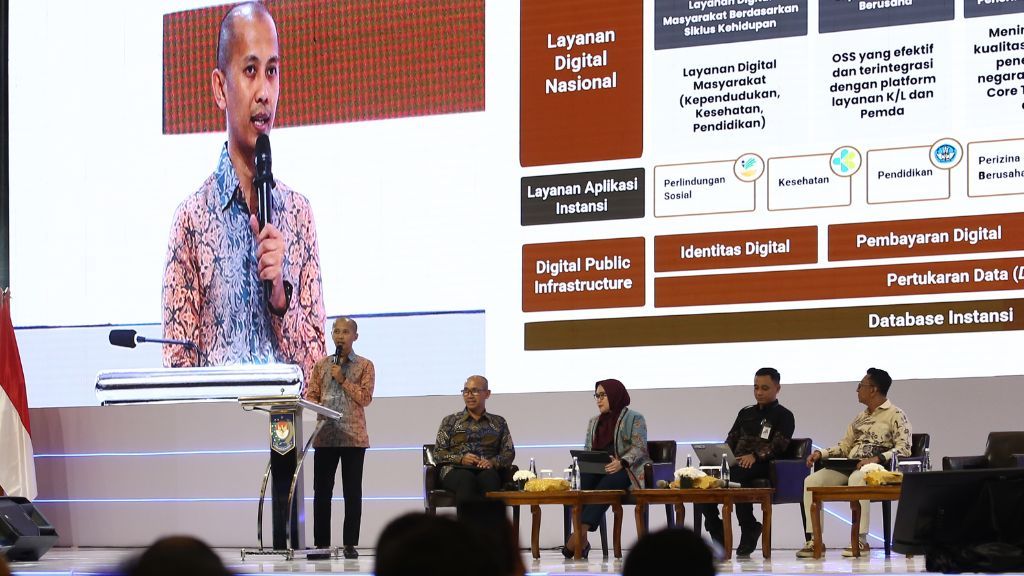
The essence of digital transformation lies in changing mindsets and ways of working enabled by strong digital infrastructure, said National Economic Council’s Principal Expert, Rahmat Danu Andika.
“Digital Public Infrastructure (DPI) is not merely about technology, but about the courage to change how the state serves its citizens. If DPI exists but our ways of working do not change, then we have not truly transformed,” he said.
Read the full article here.