GovMesh 4.0 in Singapore brought together six more governments discussing future of data-driven governance
This edition of GovMesh broadened the group of participants from central digital government agencies to include delivery unit leads, national statistics offices, and space agencies.
-1776069498818.jpg)
The GovMesh 4.0 participants.
This March saw GovInsider and interweave – with support of KAS Singapore – host a fourth edition of GovMesh in Singapore, in conjunction with GovInsider’s Festival of Innovation (FOI) 2026.
As with previous editions, the event sought to bring together digital government leaders “beyond the usual suspects” that usually convene regularly at international conferences.
This edition also introduced a central theme running throughout the day – data-driven government – and broadened the group of participants from central digital government agencies to include delivery unit leads; national statistics offices and space agencies.
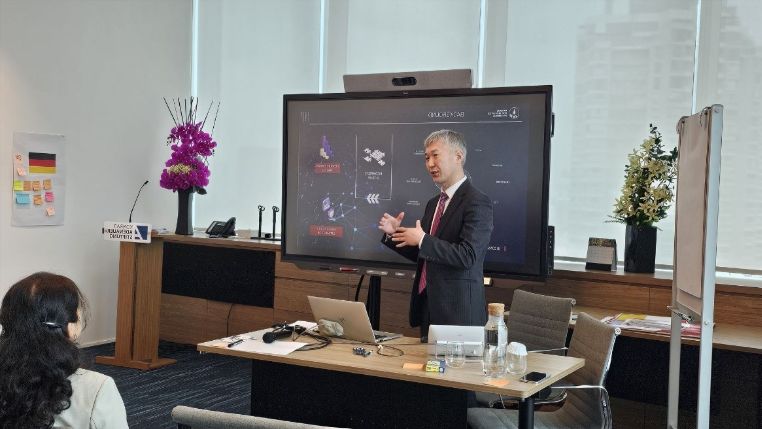
This broader coalition of participants reflected the increasing importance and proliferation of technology across the public sector.
Six governments participated in the event – Indonesia, Sri Lanka, Mongolia, Japan, Uzbekistan and Thailand – together with experts from the Global GovTech Centre in Berlin and UNDP Singapore.
Though the theme was ostensibly data-driven government, the thread that ran throughout the day was moving from data to public value.
From the Agentic State to the rollout of digital public infrastructure (DPI) in Indonesia and Sri Lanka to the use of satellite data, there was a recognition from all the speakers of the importance of telling stories that matter to society and getting beyond technocracy.
As Naoko Sugita, Advisor to the Director of Japan’s Aerospace Exploration Agency, puts it, “what people want is not data but information”.
Rolling out data-driven initiatives across government
As is traditional at GovMesh events, the day began with a series of lightning presentations, allowing participants to lead with “their best foot forward” in showcasing a concrete initiative that each of them was working on.
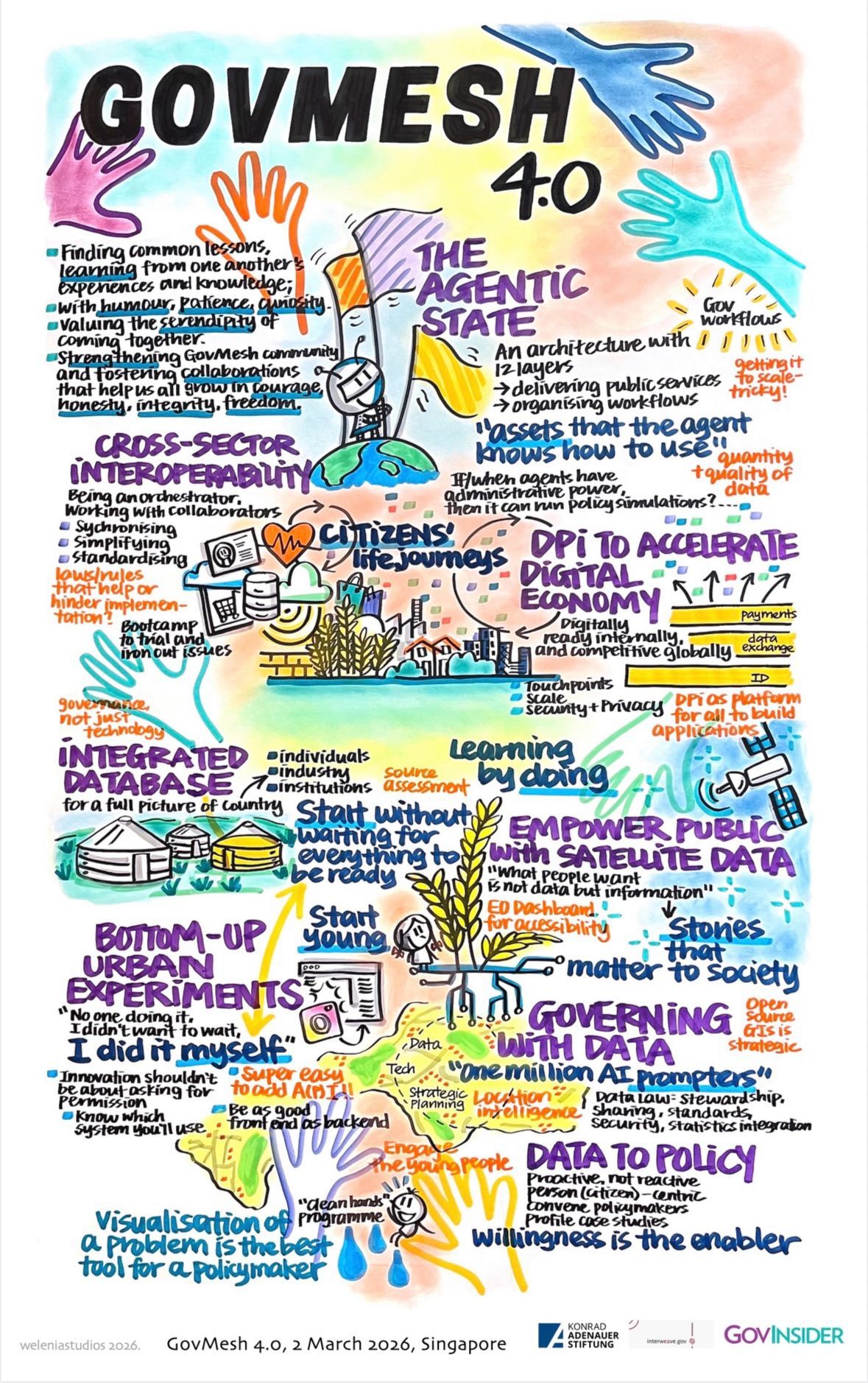
We heard about cross-sector interoperability in Indonesia, the 12 layers of the Agentic State, Mongolia’s interoperable databases and Japan’s use of satellite data to empower policymakers and the public.
Though the focus was on data, participants left each other sticky notes with questions that covered the whole tech stack – thinking about talent, climate change and energy requirements.
This shift in focus towards ecosystem-level thinking mirrors a trend we began to see last November at GovMesh 3.0 in Vilnius, where questions of sovereignty prompted participants to think beyond the service and application layer in their definitions of “digital government”.
Safe and responsible stewardship
Likewise, there was an increasing shift towards thinking about safety and participants’ responsibilities as stewards of data.
The discussions returned throughout the day to questions of accessibility, and data misuse. “What is lost by being fully digital?”, one participant asked after a presentation on automated data-gathering.

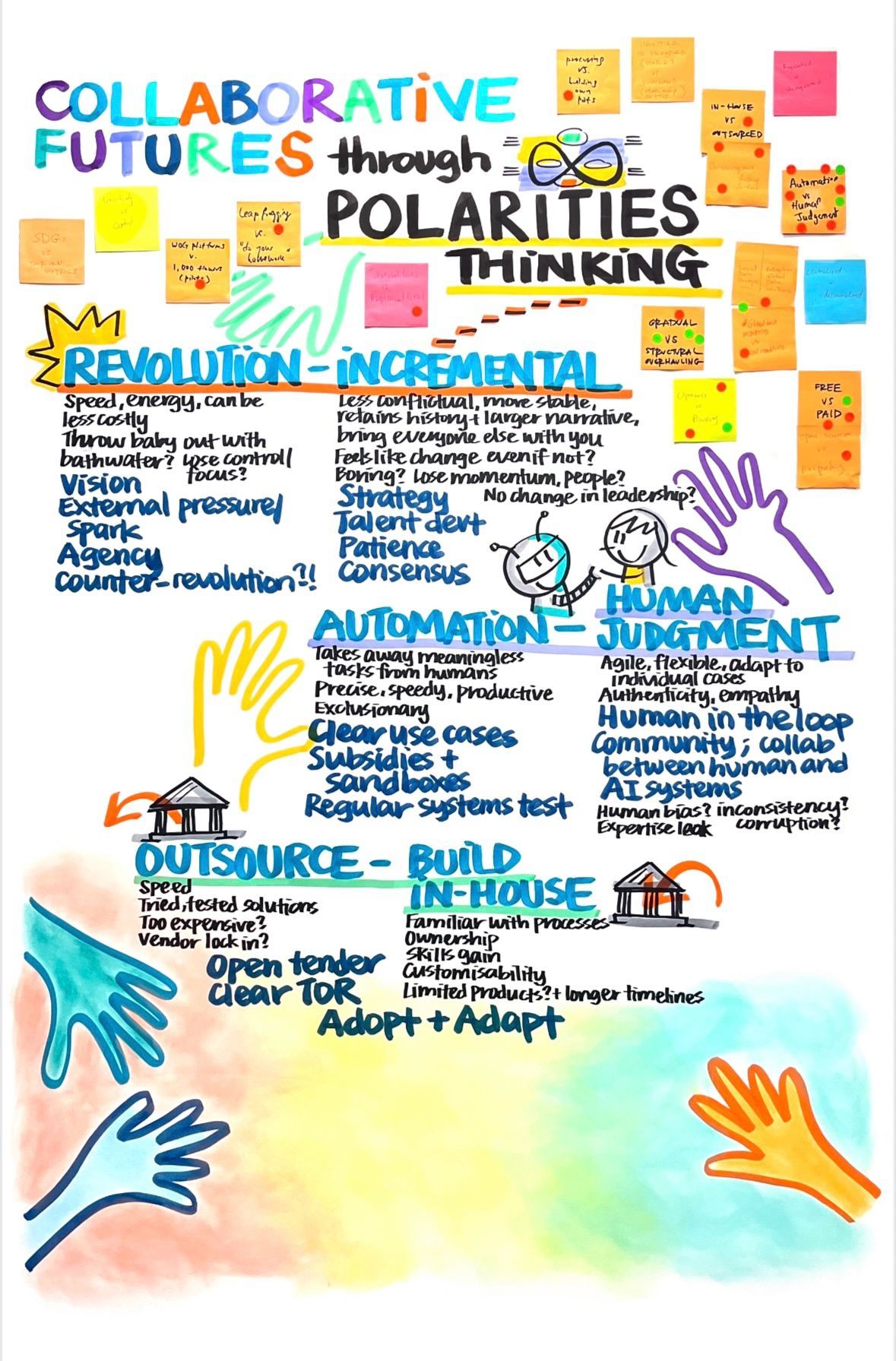
Continuing the trend of previous GovMesh events, these questions were funnelled into an afternoon “futures exercise”, where participants explored digital polarities.
In a quest to imagine “an enjoyable and impactful public service”, the government representatives balanced revolution and incremental change, automation and human judgment, and outsourcing versus building in-house.
Our next GovMesh event in The Hague will take place in June 2026, and continue these discussions with a focus on resilience.
The individual stories on the participating governments can be found here:
- Collaborative approach the way forward for Indonesia’s DPI journey
- Japan space agency’s mission to use storytelling to bring satellite science back to earth
- Mongolia turning data silos into cost-efficient governance tools
- Agentic state vision requires an ecosystem-wide approach to data innovation and stewardship (Global GovTech Centre Berlin)
- UNDP data navigator helps countries turn data into policy
- With the vendor saying ‘no’, Thai civil servant built his own tools
- Inside Sri Lanka’s efforts to leverage digital public infrastructure (DPI) for economic recovery
- How Uzbekistan’s geospatial platform has helped to build a data-first government
GovMesh 4.0 also engaged a visual artist, Wendy Wong, to map out the presentations and the "futures" exercise across the day. You can find the visual maps below:
Individual country's presentations:
"Futures" exercise mapping the digital polarities: