GovMesh Digest: GovMesh 2.0 in Berlin brought together best practices in digital government from Asia and Europe
By Luke Cavanaugh
The follow-up to the first edition of Singapore brought seven more governments together to reflect on the present and future of digital government and exchange best practices.
GovMesh Digest is a special report produced by GovInsider and interweave to summarise the key learnings from the two editions of GovMesh events which happened in Singapore and Berlin.
In March this year, the first edition of GovMesh was held in Singapore alongside GovInsider’s Festival of Innovation 2025.
Conceived around the notion of digital government as a level playing field, it sought to bring together a set of digital leaders “beyond the usual suspects” for a candid and vulnerable exchange of ideas around the present and future of digital government.
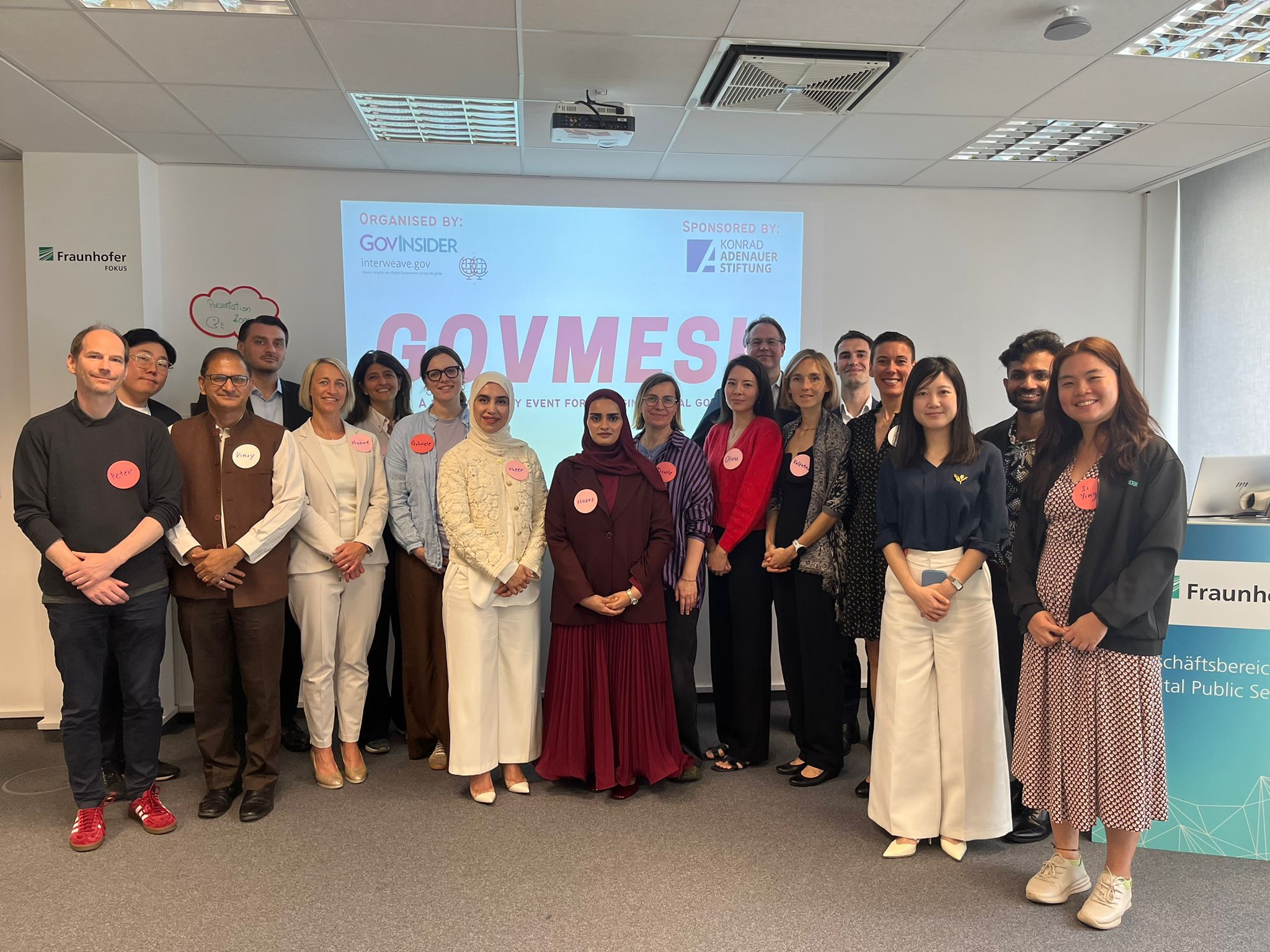
In June, it was the turn of a new set of leaders to gather at Berlin’s Fraunhofer Institute on the sidelines of the Creative Bureaucracy Festival – one of the largest and most exciting government innovation meet-ups in Europe – for a second GovMesh with a revised format.
The venue for the forum was split into three zones: presentation, unconference and a new reflection zone, encouraging the intimate sharing that had proved so successful in Singapore.
A refreshed agenda introduced structured time for reflection on participants’ shared values, as well as time for unpacking the themes of their presentations.
The power of open-source, and moving “from silos to synergy”
This time, GovMesh brought together governments as geographically as far apart as Italy and Taiwan, and as different in size as Lithuania and India.
Together with experts from Konrad-Adenauer-Stiftung (KAS) and Digital Public Goods Alliance (DPGA), they started the day by presenting with “their best foot forward” in a series of lightning talks around specific case studies they had worked on.
Open source was immediately introduced as a theme that would recur throughout, with DPGA opening with a presentation on how it could move governments “from silos to synergy” in sharing ideas.
India and Italy both presented on the power of Digital Public Infrastructure (DPI), setting the tone for a day filled with creative forms of collaboration.
So too was reinvention a clear theme, perhaps a given in today’s uncertain geopolitical environment.
Taiwan’s Ministry of Digital Affairs (MODA) shared their experiences of using their Civic Community to co-create digital solutions; Lithuania talked about the success of challenge programmes and sandboxes in their country; and the United Arab Emirates (UAE) explained how to create a culture of experimentation in government where the answer to questions is “Yes, it’s possible”.
It was fitting, given recent digital government news, that the event was taking place in Berlin, and presentation on one of the biggest “reinventions” of all was left to the host country talking about their digital ministry.
Questions after the presentation, and those posted on sticky notes around the room, focused on implementation, private sector involvement, and synergies across ministries.
Building digital government in an uncertain world
As the conversation moved to the afternoon, questions began to turn even more explicitly to building and leading digital teams in an uncertain world.
Political models for digital government – especially keeping momentum in times of democratic upheaval – was a theme chosen by participants for discussion during an unconference.
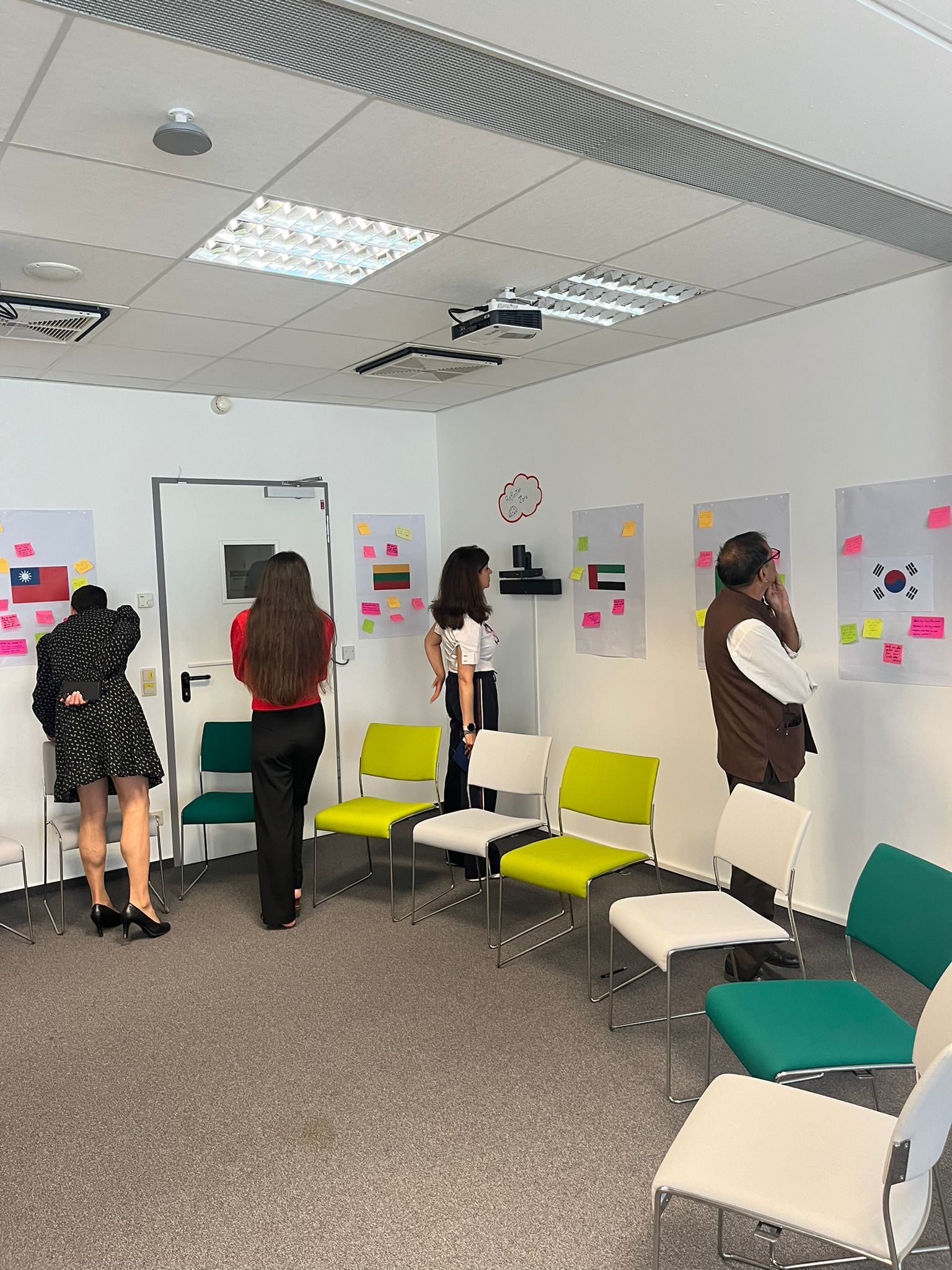
As the participants moved around the room, they discussed everything from cybersecurity in the face of hostile actors to combatting disinformation to the existential need to use digital to boost citizens’ trust in government.
Combined with the other major theme of the session – collaborating across the digital ecosystem and involving the private sector – it was clear that governments are feeling the pinch to deliver with more haste and more ambitious results while being offered fewer resources.
And yet the tone was not one of pessimism, especially when it came to delivery.
To return to the idea of the UAE’s “Yes, it’s possible”, countries spoke with enthusiasm about their missions over the next few months for their mission in the final reflection session and paused on the specific lessons that they were going to take from GovMesh back to their home country.
As for what’s next for GovMesh, we are excited to announce that we will be holding a third edition of the event in partnership with the Lithuanian government as a side event to the GovTech Leaders Summit in Vilnius in October.
If you are interested in participating, and joining the GovMesh community, please reach out to interweave or GovTech Lab Lithuania.
Over the next few days, we will write about exciting individual presentations by the participating governments at the Berlin GovMesh conference. Watch out for this space.
The individual stories on the participating governments can be found here:
- India’s digitalisation journey started with land records
- UAE’s innovation culture moves from global to local, and then back again
- South Korea boosts public-private synergy using Open Digital Services
- Lithuania steps out of its Baltic neighbour’s shadow
-
Can digital public infrastructure crack the Italian bureaucracy?
-
Germany’s attempts to finally get digital right with new Digitalisation Ministry
-
Taiwan takes a leaf out of Estonia’s DPI playbook on safe data sharing